
We help hospitality businesses simplify financial systems, access outsourced finance expertise, and build the visibility needed to protect margins and grow.
Hospitality runs on tight margins, seasonal demand, and complex multi-entity operations. We build financial systems and provide the outsourced finance expertise to keep pace with all of it.
Implement cloud-based ERP platforms that give real-time visibility across properties, entities, and departments, without the manual overhead.
Link your POS, PMS, payroll, and finance systems so data flows automatically and accurately across every property and entity.
We manage daily sales reconciliations, vendor bills, and payroll journals. That frees your team to focus on guests, not spreadsheets.
Outsourced controllers provide the financial discipline hospitality groups need, at a fraction of the cost of an in-house hire.
Outsourced CFOs provide high-level financial strategies to help hospitality businesses navigate seasonal demand, protect narrow margins, and fund expansion.
Hospitality payroll is complex. Shift allowances, hourly workers, service charges, and bargaining council rules all require the right system.
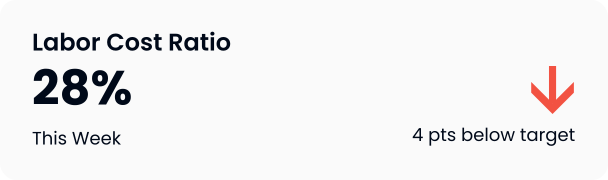
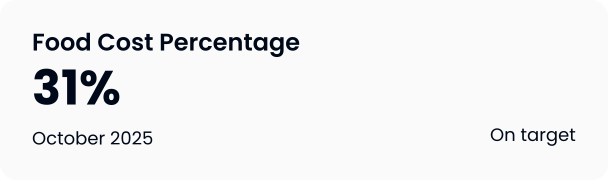
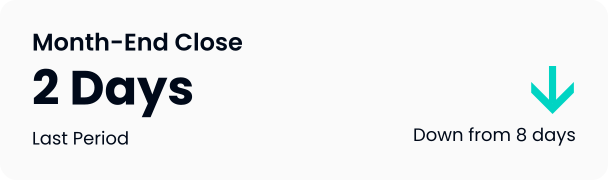
Real-time dashboards built around the metrics that matter most in hospitality: occupancy, margins, labor costs, and revenue by department.

We work with best-in-class platforms designed to handle multi-property complexity, tight margins, and fast-moving hospitality operations globally.
Sage Intacct is a cloud accounting platform that automates financial processes, delivers real-time insights, and helps businesses scale with control.

Streamlines your HR and payroll operations with flexible configurations, tools for compliance, and full integration capabilities for those with complex organizational needs.

Addresses all your ERP needs with stronger accounting, inventory, and operations management - ideal for organizations requiring hybrid or on-premise deployment.

Delivers reliable, desktop-based payroll processing with strong compliance tools and full backend access to enable custom reporting and hands-on data control.
Simplifies all bookkeeping, invoicing, and reporting processes for small to mid-sized businesses, offering real-time financial visibility and helpful automation features.

4flow provides advanced logistics software that improves network planning, reduces operational costs, and helps businesses streamline global supply chain processes.

Helps solve any spend control issues and visibility challenges through features like expense tracking, corporate cards, and automated accounting integration.

Accelerates the financial close process by improving your overall data accuracy and centralizing your workflows to enable better collaboration across accounting teams.

From boutique hotels to national restaurant chains, we build financial systems and deliver outsourced finance for hospitality at every scale and in every market.

Revenue and occupancy data tracked in real-time across single and multi-property hotel operations.
Food cost management, tip compliance, and POS integration for high-volume restaurant and cafe operations.
Multi-entity consolidation and group-level financial reporting for branded hospitality collections and multi-brand franchise operations.
Financial management for large venues managing diverse revenue streams, high staff volumes, and complex billing.
Right-sized systems that give independent operators the same financial clarity as major hospitality chains.
Integrated procurement, inventory, and cost management for food and beverage operations at any scale.
We’ve built financial systems across three continents and delivered outsourced finance for hotels, restaurants, and hospitality groups. We know where it gets complicated.
Our bookkeepers, controllers, and CFOs know hospitality finance. So do our systems specialists.
Fix the process before automating it. Better design produces better outcomes than just better software.
US, South Africa, and Canada teams with genuine expertise in local markets and regulations.
We don't walk away after go-live. We audit our own work and keep improving your system.
We’re proud to support the teams behind these logos. Long-term partnerships built on trust, capability, and results that hold up.







We take time to understand what’s not working, then build practical systems that fix it and keep it fixed.

We dig into what’s slowing you down, pinpointing messy processes, gaps, and what’s getting missed or duplicated.

We outline what needs fixing, what it’ll take, and what a better setup looks like.

We get your team aligned, systems configured, and workflows in place, without confusion, rework, or wasted time.
We want the world to see how virtually anything is possible with the right tools, solutions, support, and, of course, expertise.
Explore our latest thinking on financial systems, reporting strategy, and digital transformation, tailored to the industries and tools we support.
A few things set hospitality apart from other industries.
First, margins are thin. Hotels and restaurants operate on tighter margins than most businesses, which means every cost needs to be tracked precisely. You don’t have much room for error.
Second, the workforce is complex. Most hospitality staff are hourly, working across multiple shifts, with variable earnings that include service charges, tips, and allowances. That’s a very different payroll problem than a salaried office environment.
Third, the systems are fragmented. The average hotel uses 8 to 12 separate systems. Finance, payroll, POS, and PMS all need to share data seamlessly, and they rarely do by default.
Fourth, seasonality. Revenue swings dramatically between peak and off-peak periods, which requires cash flow planning that most general-purpose accounting tools weren’t built for.
Getting hospitality finance right means having systems designed specifically for these pressures, not generic software adapted to fit.
We start with a discovery phase to understand your current systems, processes, and the gaps between them.
The design phase is where we invest the most time. In a high-turnover industry like hospitality, rushed implementations are one of the most common and costly mistakes we see. Taking time upfront to configure the system correctly prevents painful rework after go-live.
Once the design is settled, we manage onboarding and training so your team is confident before they go live. Hospitality implementations typically include connecting your PMS and POS systems to your financial platform, building dashboards around your key metrics, and structuring the system to scale as your business grows.
After go-live, we audit our own work. We come back, run a control check, and verify that the KPIs we set out to improve have actually moved. A system that went live quickly but needed a year of fixes isn’t a success. We don’t call it done until it’s actually working.
The right KPIs depend on your business type, but several matter across the board.
Hotels should track Revenue Per Available Room (RevPAR) and Average Daily Rate (ADR). Both tell you how effectively you’re converting available inventory into revenue, and both are benchmarked widely enough to compare your performance against the market.
Restaurants should monitor food cost percentages and prime costs, which is food plus labor as a proportion of revenue. That single ratio tells you more about a restaurant’s financial health than almost anything else.
Labor cost percentage matters across the board. In most hospitality businesses, labor is the largest single expense, so tracking it in real-time against revenue is non-negotiable.
Beyond these, gross profit by department shows which areas of the business are pulling their weight and which aren’t.
The most useful insight comes when these metrics are visible in real-time, so you can act during the period rather than after month-end when the window has already closed.
Outsourced finance is a core part of what we do for hospitality businesses, particularly in the US. Not every operator needs a full in-house finance team. Most need the right expertise at the right level, without the overhead of hiring it permanently.
Our outsourced bookkeeping team handles daily sales reconciliations, vendor payments, and journal entries. Your managers can focus on guests while we make sure the numbers are right every single day.
Our outsourced controllers bring discipline to multi-property reporting, revenue audits, and compliance. They track RevPAR, labor cost percentages, and gross profit by department, and they keep your books audit-ready year round.
Our outsourced CFOs provide the strategic layer. They build rolling forecasts, model expansion scenarios, and give hospitality leadership the financial visibility they need to make confident decisions.
Each function has a dedicated contact. You get a team.
Compliance in hospitality has several layers: tax obligations, tip reporting, employment equity requirements, bargaining council rules, and labor law. Non-compliance isn’t just a paperwork problem. It leads to penalties, audits, and in serious cases, retrenchments that directly affect service quality and revenue.
Our approach is to build compliance into the system design from the start. That means automated tax calculations, correct tip and service charge allocation, employment equity reporting tools where applicable, and audit-ready documentation baked into the workflows from day one.
Cloud-based payroll systems are particularly valuable here because legislative updates are applied automatically rather than requiring someone to manually track and apply every regulatory change. The company is responsible for deducting the correct tax, not the employee. Getting that wrong is expensive.
The goal is to put your organisation in the green and keep it there, without relying on a single person to stay on top of every change.