
At TydeCo™, we assist member-based organizations to manage their dues, track programs and advocacy, and report clearly across PACs, foundations, and educational initiatives.
Gain real-time visibility into the metrics that matter—from member growth to engagement, retention, financial health, and program performance.


We support associations in managing member dues, programs, and advocacy efforts with clean reporting across AMS tools and financial systems.

Track Member Revenue Streams
We help you configure your organization’s systems to manage dues, donations, events, and training, so you know exactly what’s driving your funding.

Support Complex Multi-Entity Setups
Many associations operate PACs, foundations, and advocacy arms. It’s our job to help keep things clean and compliant.

Align Financial Systems with AMS
TydeCo™ connects your financial tools to your AMS, streamlining operations to reduce manual workload and improve reporting accuracy across entities.

Enable Program-Level Reporting
We break down financials by advocacy, education, or member services, so you’re able to know what’s working and where to invest.
Understand what matters most—from membership retention to event ROI—with dashboards built for your mission and structure.


From QuickBooks to AMS integrations and Intacct, we tailor systems to support membership, financials, advocacy, and multi-entity needs.
Sage Intacct is a cloud accounting platform that automates financial processes, delivers real-time insights, and helps businesses scale with control.

Simplifies all bookkeeping, invoicing, and reporting processes for small to mid-sized businesses, offering real-time financial visibility and helpful automation features.

Helps nonprofits manage their donor data, fundraising campaigns, and reporting with a centralized, cloud-based system intrinsically built for growth and engagement.

We understand the unique needs of associations and deliver the tools, systems, and expertise to support them effectively.
We configure solutions that support complex member structures, advocacy, education, and political funding activity.
Gain tailored insights for dues, conferences, and training—aligned to your operational and compliance priorities.
We handle associations with PACs, nonprofits, and training arms using robust, scalable financial architectures.
Sync membership tools with accounting systems to streamline reporting and reduce manual admin work.
We’re proud to support the teams behind these logos. Long-term partnerships built on trust, capability, and results that hold up.







We take time to understand what’s not working, then build practical systems that fix it and keep it fixed.

We dig into what’s slowing you down, pinpointing messy processes, gaps, and what’s getting missed or duplicated.

We outline what needs fixing, what it’ll take, and what a better setup looks like.

We get your team aligned, systems configured, and workflows in place, without confusion, rework, or wasted time.
TydeCo™ supports a wide range of member associations—each with distinct operational models, compliance needs, and reporting priorities.
Manage member dues, event registrations, and continuing education in one central system.
Simplify governance reporting, member engagement, and communication workflows.
Track member contributions, automate renewals, and manage shared resources.
Coordinate events, process donations, and connect finance with CRM and outreach tools.
We want the world to see how virtually anything is possible with the right tools, solutions, support, and, of course, expertise.
Explore our latest thinking on financial systems, reporting strategy, and digital transformation, tailored to the industries and tools we support.

Whether it’s dues tracking or multi-entity compliance, here are common questions we hear from member associations we support.
Associations often have several revenue streams, like dues, donations, and training fees. We place all revenue streams in a single system so they can be easily tracked and segmented, for example, by member tier. Dashboards provide an overview of revenue streams, so you can make smarter decisions for future growth.
Yes. One of our specialties is system integration. Say goodbye to exporting data, as we connect dues and billing data directly into your new platform. Systems are synced, so changes in one set of financials are immediately reflected in your centralized platform. This increases the accuracy and decreases the complexity of reporting requirements.
We keep entities’ (PAC, foundation, restricted funds, advocacy) data separate in their own books. Your system also provides cross-entity visibility, which provides views of the entire organization for high-level stakeholders. You needn’t worry about double-counting or duplicate entries because transactions are reflected across the structure, increasing transparency and enhancing audit preparation.
Yes. Transactions are tagged by initiative, making it easy to track and assess impact and ROI. This data is vital to planning fundraising events and ensuring budgets are allocated to optimize results. The data also encourages donations or grants because donors can see that funds are allocated wisely and not frittered away.
Yes. We work with all associations, from small to large multi-entities. Our software systems are scalable, so they fit your association no matter the stage of growth. The level of support depends on your association’s needs, for example, small associations might need full accounting services, while large entities need only specific functions.
Our approach to reporting is based largely on automation and integration. For instance, we connect your association’s management system to accounting and sync dues, events, training, and donations. We also remove manual imports that have gone stale.
Revenue is tagged by membership tier and program. This shows you which streams fund operations, and enables you to plan growth based on evidence. Restricted and unrestricted income is split, making board packs clearer.
Automation sends scheduled reports to the finance and program leads concerned. This keeps everyone current with the latest data, without unduly cluttering unrelated inboxes. It helps to keep a single source of data for members, invoices, and receipts. This also reduces disputes because everyone works from the same figures, and saves time come month-end reconciliations.
We set up entities with consistent structures. This ensures regulatory compliance (including industry, state, national, and international compliance regulations) across the board, while keeping consolidation predictable.
Systems ensure restricted funds are separated from operating revenue. This clearly shows balances and movements, which eases demands for constant monitoring.
Software enables you to drill down into data from group to entity to program. This source data provides clear answers to any questions board members might ask. There are also clear audit trails that maintain approval and documentation tasks. The result is less time spent gathering evidence when it’s required.
Calendars and templates are aligned across entities, with simple rhythms that protect processes and operations against staff changes.
We ensure each element works to clarify reports, making them easy for boards to understand. For instance, transactions are tagged by advocacy, education, events, and services. This enables boards to see spend and revenue against outcomes.
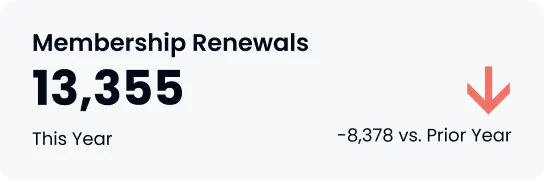
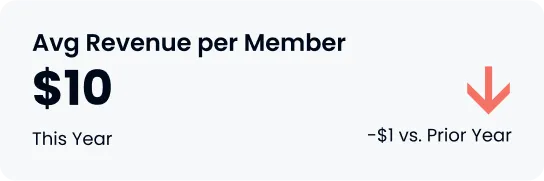
Dashboards are great for presenting information to board members because they provide quick overviews and options to drill deeper down into data. For instance, dashboards can show member-related data, like active and renewing members and revenue per member. They also support financial narratives with accurate figures.
Tools can track cost versus return by initiative, so you can shift the budget to focus on what members value. So, you can cut loose initiatives that have little to no impact. You can also compare results year-on-year to identify trends, which helps you act quickly to remove obstacles to your goals.
You can create packages containing a small set of charts for each meeting, this reduces prep time and can keep discussions focussed on the agenda.
There are several important metrics that can be highlighted by dashboards. An example of those that matter most includes:
Active members. See numbers at a glance to get an idea of your reach. This enables you to plan targeted campaigns based on context.
Membership retention. You can drill down into which segments are at risk. This gives you the chance to test various offers to determine which is the most effective at increasing renewals.
Member revenue. Get insight by segment, which enables you to align pricing and benefits, and increase value per member.
New members. Track growth, especially acquisition speed and sources. You can then adjust programs that aren’t hitting the mark, making them more impactful and effective.
It’s important to give program managers access to these dashboards, so they know exactly how their initiatives are performing, especially in relation to other active programs. Sharing data reduces the number of requests sent to finance, and enhances daily decision making.
There are some relatively simple integrations that can boost performance without heavy custom work. For instance, your AMS (Association Management System) can connect to Sage Intacct or Xero to ensure clean postings and consolidated reporting.
Member associations that do a lot of fundraising will do well to integrate DonorPerfect alongside their AMS, so fundraising is aligned with finance. Then there’s FloQast for consistent, accurate, and reliable close. FloQast also attaches evidence to tasks, which conveniently shortens audits.
Ramp software specializes in card-related transactions, including card controls. It also enhances spend visibility so you can see the financial outcome after events and conferences without any surprise expenses or costs sneaking in at the end.
We’re rather fond of using a small integration layer that keeps moving smoothly between departments. Enhanced automation reduces reliance on spreadsheets and ensures there are fewer missed renewals to worry about.