How the CFO’s Role Evolved Into Two Jobs

Traditionally, on the first Monday of the month, CFOs were expected to explain the previous month’s results. Today, that CFO may need to advise on an AI investment before lunch and defend a new capital allocation at the afternoon board meeting.
Modern CFOs have two roles:
- Maintain compliance with accurate numbers and disciplined processes.
- Use the numbers to influence strategic financial planning.
The additional role reaches beyond finance because nearly every major business choice has financial consequences. The image below shows just how big the role has become.

Source: Egon Zehnder, The Super CFO
What Changed the Shape of the Role?
The CFO mandate widened because the conditions surrounding finance changed.
- Stricter regulations increased the cost of getting the numbers wrong.
- Market volatility increased the cost of receiving them too late.
- Technology made faster analysis possible.
Investors also began looking beyond profit to understand resilience, sustainability, and the quality of management decisions.
CFOs were forced to deepen their understanding of operations because broader insights facilitate navigating shifting markets. Modern CFOs must consider data, governance, and measurable returns before making any significant investments, including new AI-powered financial management tools.
Compliance-based financial practices protected organizations by ensuring that yesterday’s activity was recorded correctly. Modern finance must still do that, but it's also expected to recognize tomorrow’s risks and opportunities early enough for the business to respond.
Financial Stewardship Before 2008
The economy was cruising comfortably, keeping the CFO's mandate focused on financial reporting, accounting, budgeting, and cash flow. Accuracy was king.
In that sense, the role of stewardship still exists, with Deloitte describing CFOs as both a steward, protecting assets and reporting the financial position, and an operator, balancing finance capabilities with cost and service levels.
What changed?
The 2007/2008 global financial crisis changed the distance between finance and the rest of the business. Instead of focusing on historical data, CFOs were expected to have contingency plans to lessen the impact of the next disaster.
Accountability Post-2008
Globally, CFOs are held more accountable when it comes to risk, liquidity, and financial decisions. In fact, CFOs are now held personally accountable for non-compliance issues within their department.
After the rude awakening, boards still asked, “Are the numbers correct?” But they added, “What are the potential risks to those numbers?”
It became the CFO's job to provide the answers.
This strengthened the relationship between control and growth, with financial discipline playing a key role in expense analysis and ROI.
Essentially, CFOs hold a mirror up to their organizations, showing boards what they're saying yes to, what must be true for the decision to work, and how much leeway they have before black turns into red.
Then Came COVID-19
The pandemic took the natural evolution of CFO responsibilities and compressed years of change into months.
There wasn't time to wait for a normal reporting cycle while revenue patterns changed and cash positions moved so quickly. The C-Suite needed scenarios and a clear view of liquidity instantly.
The Corporate Finance Institute describes the pandemic as an accelerator that pulled CFOs into broader leadership. Its analysis notes that management teams increasingly turned to CFOs to explain what was happening from both a quantitative and qualitative perspective.
Amanda Akien, features writer for World Finance, makes a similar point, describing the modern CFO as the CEO's co-pilot, with a strong focus on strategic leadership and long-term value. This includes stress testing and scenario planning to help organizations respond to economic unpredictability.
It boils down to this:
- Traditional reporting describes the impact of a particular disruption.
- Scenario planning helps businesses act before the full impact is felt.
CFOs also had to adapt to changing board requirements. For instance, boards suddenly needed someone to translate financial signals into a choice, then explain the consequences of that choice in plain language.
That expectation landed squarely on CFO shoulders.
Finance Connected Signals Other Functions Couldn't
Disruption means different things to different departments. Sales sees demand while operations sees capacity, and HR sees workforce pressure. Finance is one of the few functions able to connect those separate signals through a common economic model.
Finance helps leadership compare options that were previously incomplete or assumed to be incompatible. This includes insight into what could happen, what would cause the outcome to change, and which indicator management should watch next.
Data doesn't guide a decision because it appears in a dashboard. It falls to CFOs to explain what matters and what action the evidence supports.
The graph below shows how CFOs experience their evolving roles.
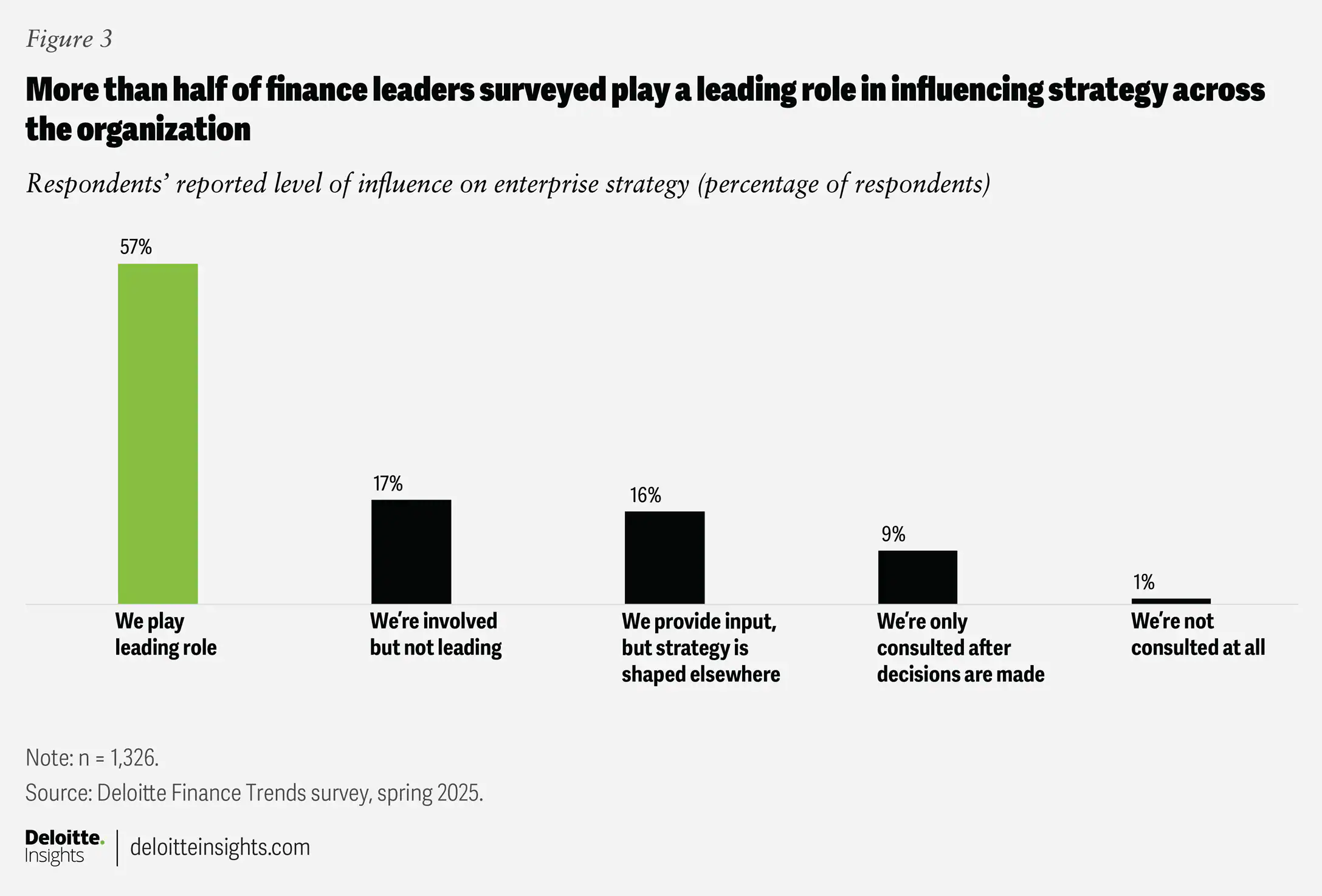
Source: Deloitte Insights, Finance Trends 2026, Figure 3
Automation Changes the Game Plan in 2023
Cloud-based platforms, automation, integration, and customizable analytics changed the landscape yet again. As processes became more efficient and in-depth data became more accessible, CFOs (and their teams) had more time and resources to spend on strategic work.
In fact, CFOs had to develop analysis skills that enabled them to stay on top of everything from cyber risk management and AI implementation to environmental sustainability and interdepartmental communication and collaboration. Instead of number crunching and reporting, modern CFOs must be creative, tech-aware, and keen data analysts.
A strategic CFO can ask whether a growth plan is properly funded, whether the operating assumptions are credible and whether the systems provide enough visibility to manage execution. The value lies in improving the quality of decision-making.
CFOs Soak Up Responsibility
Businesses have come to expect more than just financial management from their CFOs, as shown in the image below.
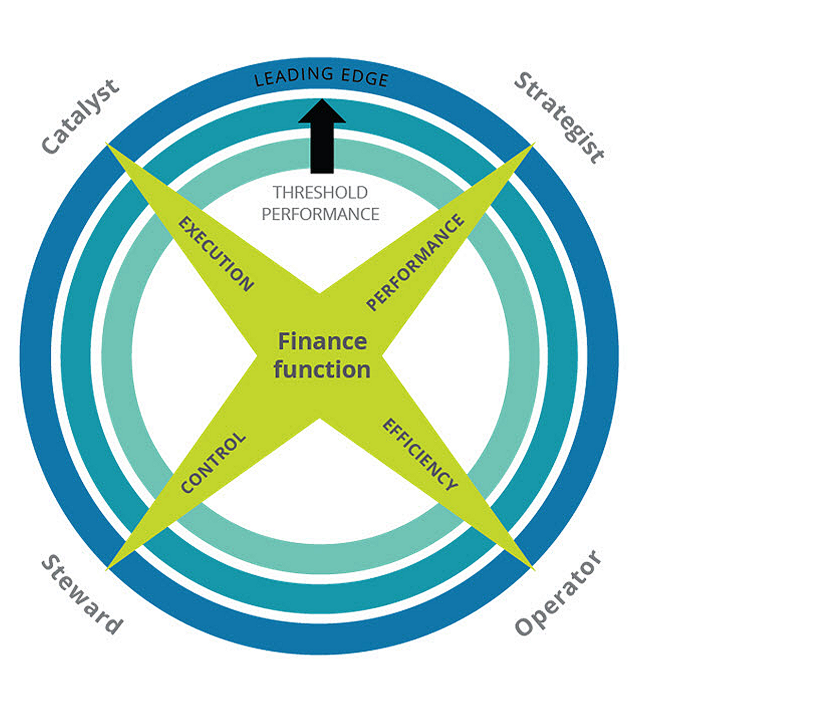
Source: Deloitte, Four Faces of the CFO
The problem is that one person can only be responsible for so much until the load becomes too much to bear. What you want, ideally, is a strong C-suite with supportive executives that carry their own weight. This ensures decisions are jointly owned, and no single person can be blamed when circumstances go pear-shaped.
The expansion can create confusion if every issue with financial consequences is handed to the CFO. The better model is stronger partnerships across the executive team, with finance bringing evidence and capital discipline to decisions jointly owned by technology and operations.
Data, Tech & Beyond
The 2026 CFO is responsible for determining whether technology produces a measurable business result. According to an article published by the New Jersey Society of Certified Public Accountants, CFOs are taking greater responsibility for AI implementation, cybersecurity spending, and digital process improvements.
They're able to do this because automation reduces time spent on traditional reporting tasks, while increasing the expectation that finance will provide forward-looking planning. However, this creates a new tension. The CFO must support faster adoption while asking the questions that enthusiasm can quash.
- Is the data reliable?
- How will the return be measured?
Someone still has to own the model and know what to do when technology goes wrong. It makes sense that digital literacy partners with financial literacy because company value depends on the quality of its systems, data, and technology choices.
Why Financial Platforms Matter to CFOs
The evolution of the CFO explains why finance platform modernization isn't IT's baby. IT can be swayed by fancy features, but finance knows whether those features have any practical value. For example, it doesn't help if a new platform does everything but support integration because gathering data from disconnected systems takes time and increases the risk of manual errors or inconsistencies. It still takes an age to generate reports that are out of date by the time they reach the board.
CFOs know what functions are a priority and will choose platforms with relevant capabilities. They might cost more than IT's pick, but they'll deliver greater ROI. After all, organizations can't ask finance for real-time answers while giving it systems that delay information.
Endnotes
1. Deloitte, "Navigating the changing role of the CFO," Deloitte.
2. Amanda Akien, "The evolving role of the CFO," World Finance.
3. Karl Smith, "The changing role of the CFO in today's business landscape," SAIPA, Mar. 21, 2024.
4. NJCPA, "10 Ways the CFO Role is Evolving," New Jersey CPA, Mar. 6, 2026.
5. Anaplan, "The Changing Role of the CFO and the Finance Team," Anaplan.
6. Corporate Finance Institute, "The Evolving Role of Chief Financial Officers," Corporate Finance Institute.
7. FinregE, "How is the Role of the CFO Evolving?" FinregE, Aug. 15, 2022.
8. Oversight, "CFO's on a Rising Tide of Change," Oversight.